Provenance remains connected
Medium, system, owner, location, authority and transfer receive a source ID.
Fileshares, mailboxes, exports and legacy media are registered as sources and, where appropriate, examined read-only. This creates a reliable view of volume, structure, integrity, risk and context before migration.
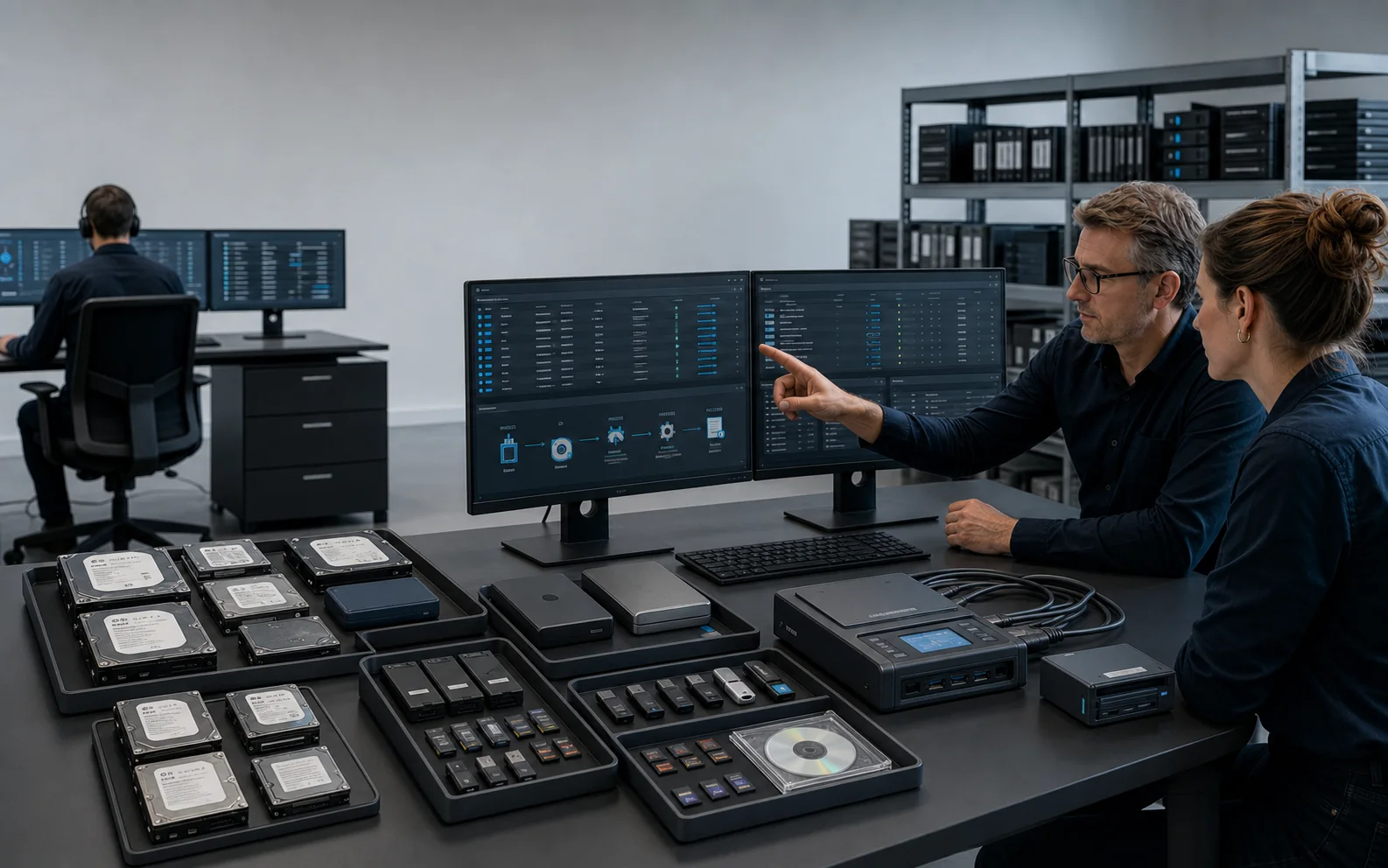
Medium, system, owner, location, authority and transfer receive a source ID.
Signatures, PUIDs, versions, encryption, damage and dependencies become visible.
The scan translates stock into work packages, exceptions, priorities and an evidence-based estimate.
source, authority and information class
write blocking or read-only where appropriate
SHA-256/SHA-512 and manifest
formats, structure, age and risk
retain, investigate, process or isolate
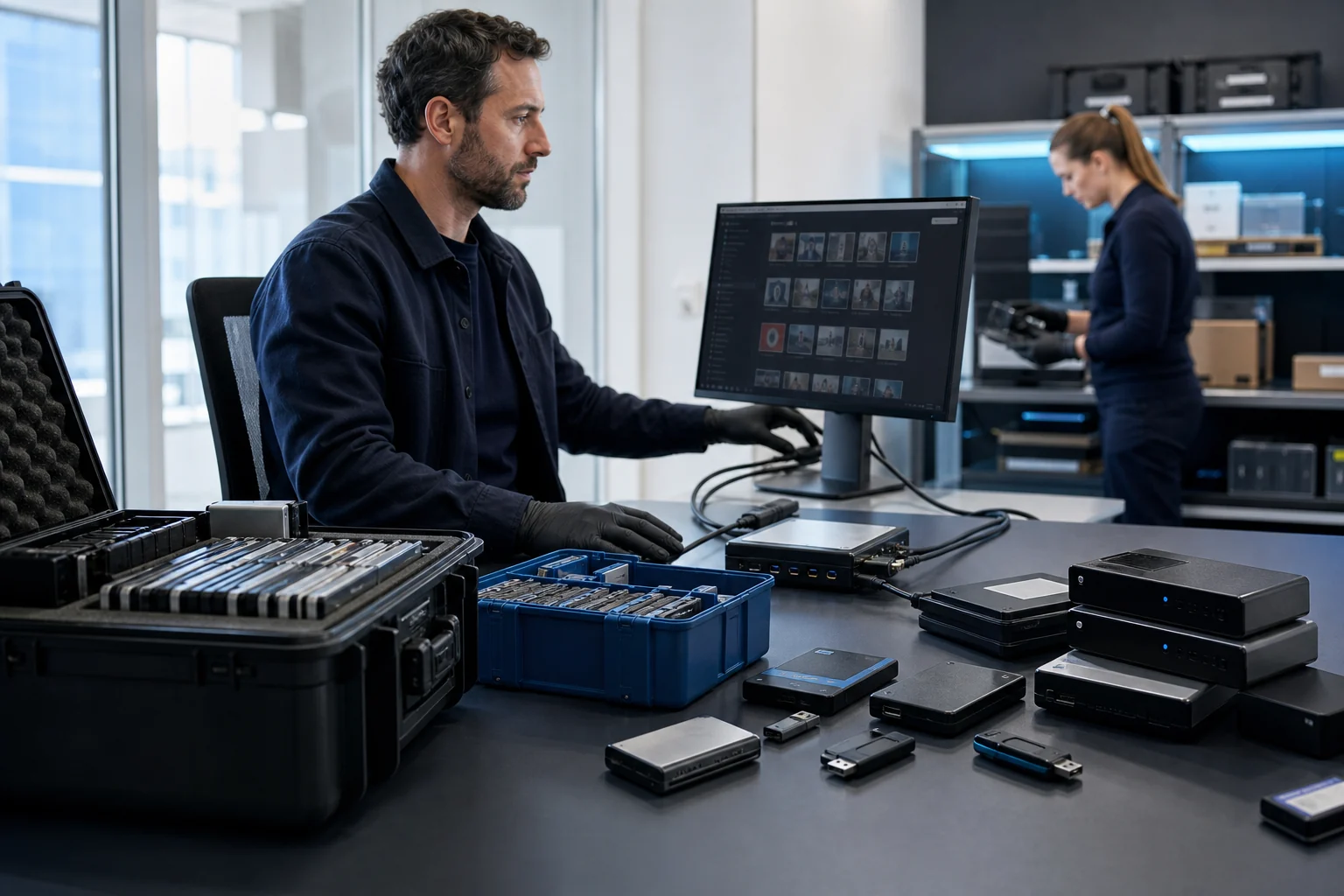
An organisation has external drives, USB media, old exports and mailbox files without a complete view. Intake links every source to owner, provenance, authority, volume, checksum and next action.
The scan looks beyond terabytes. Distribution, complexity and exceptions determine the real processing challenge.
Every source receives a traceable position in the next process.
A readable overview for governance, records management and IT.
Machine-readable inventory with identifiers, properties and checksums.
Clear phasing for processing, migration, transfer or further investigation.

Unknown formats, encrypted files, duplicates and damage do not disappear into a report. They receive a controlled route for investigation, quarantine, recovery, migration or transfer.
The scan can run on site, in a segregated processing environment or on controlled copies. Only agreed reports and manifests leave the source zone.
We align the route with recognised standards and specifications where they fit the source, destination and customer responsibility. This is never presented as automatic certification.
Not silently. Where technically possible and appropriate, intake is read-only or uses an accountable copy. Every necessary action is recorded.
Yes, but unusual, encrypted or physically damaged media first receive a specialist feasibility assessment.
No, but it does produce the evidence required to estimate volumes, complexity, exceptions and desired outcomes more realistically.
Start with one source, one process or a read-only assessment. We will define what should remain local, what evidence is required and which route creates value first.