See what actually exists
Read-only inventory of sources, volumes, formats, risks, duplicates, encryption and context.
BronVast brings existing digital data to agreed archival standards for integrity, formats, metadata, context, rights and sustainable storage. The knowledge created in that process can become rules, evaluation sets and task-specific models that also support other and future data flows.
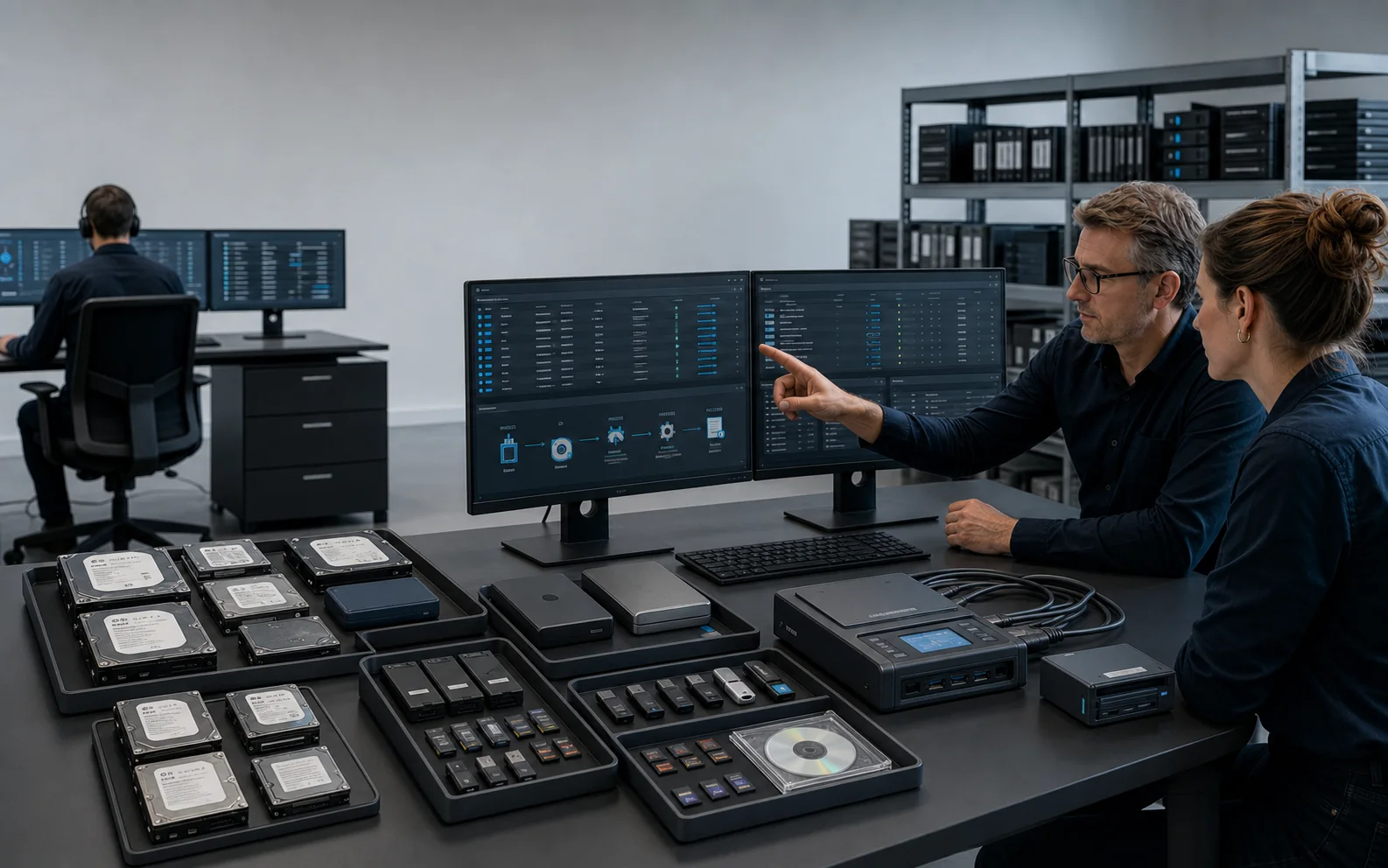
BronVast Messages starts with a lawfully obtained source package and connects integrity evidence, reconstruction, context, human appraisal, holds, destruction and transfer in one accountable route.
Read-only inventory of sources, volumes, formats, risks, duplicates, encryption and context.
Fixity, format validation, metadata, rights, preservation events and controlled information packages make the data sustainably manageable.
Taxonomies, examples, evaluation sets, rules and local models can also support new data flows.
media, fileshares, mailboxes and exports
integrity, format, privacy and relations
metadata, provenance and responsible roles
rules, examples, embeddings and task models
recognise, describe, route and execute under control
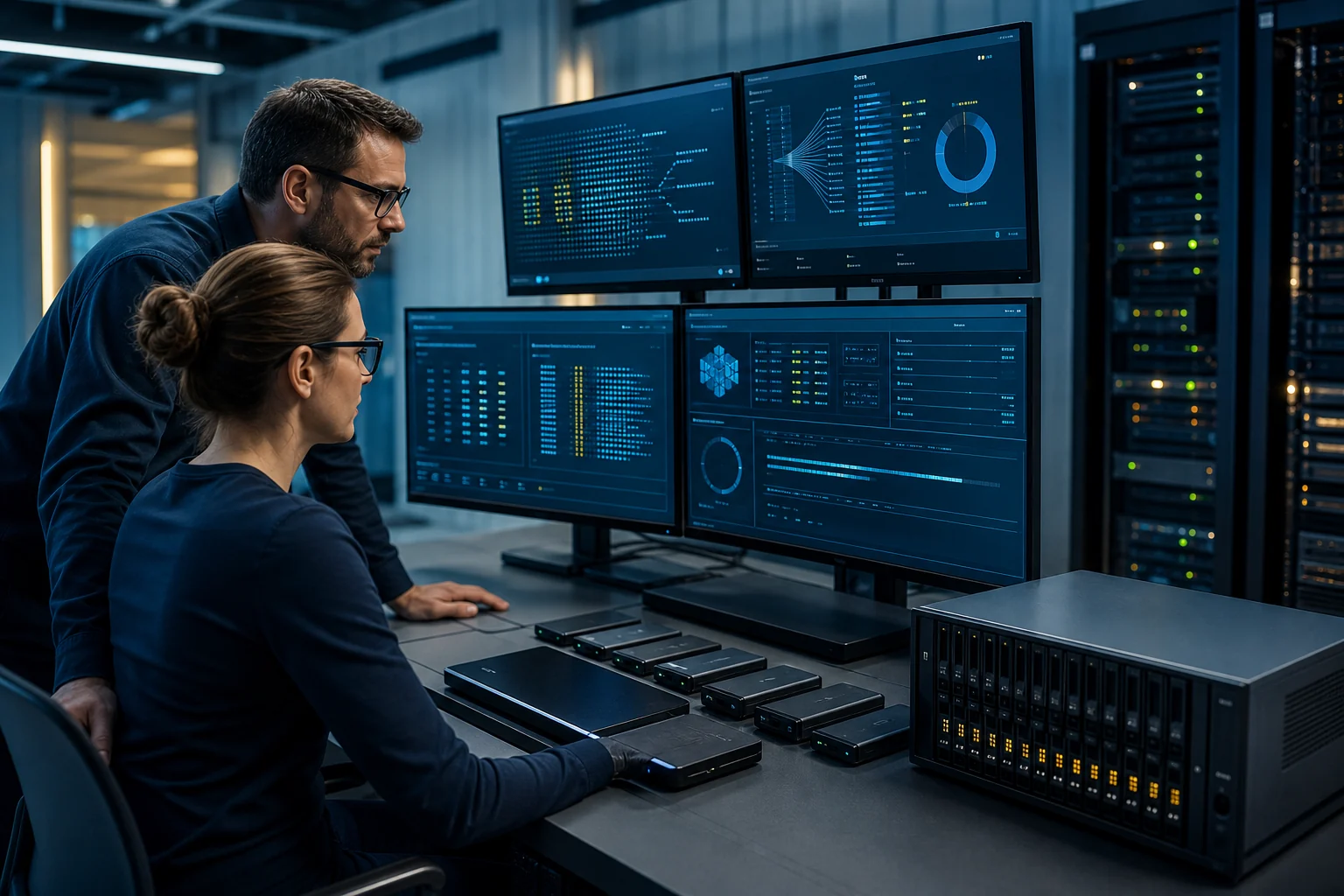
BronVast registers the source, checks integrity and formats, reconstructs structure and context, and delivers files with metadata and processing evidence through the agreed archival route.
The first result is digital data demonstrably brought to agreed archival standards. The second is the controlled knowledge layer created during that processing.
The engagement delivers more than files. It creates a controlled knowledge layer the organisation can continue to use.
Volumes, risks, cost drivers and routes are visible before major migration begins.
Decision rules, metadata, examples, evaluation sets and models remain documented rather than becoming one-off project knowledge.
A reusable model can recognise document types, propose metadata, run checks and guide new intake to the right route.

Document profiles, approved examples and exceptions from the project can support a local model. On a new upload it can recognise type, extract fields, propose metadata and recommend the right process route.
Source files, metadata, embeddings, vector store, model inference and suitable fine-tuning can remain on customer infrastructure or in a segregated 2dA environment. Hardware, licences, access, logging and retention are defined per route.
We align the route with recognised standards and specifications where they fit the source, destination and customer responsibility. This is never presented as automatic certification.
No. An engagement can start with a read-only scan or one concrete source flow. Routes work separately and can be connected later.
Yes, when infrastructure and selected models support it. Data, metadata, embeddings, vector store and inference can remain local. The architecture is agreed per engagement.
Task-specific models or configurations built from controlled examples, rules and corrections created during processing. They can later classify document types, extract fields, propose metadata, test quality or route information in other data flows. Versions, tests and human corrections remain documented.
Yes. After evaluation, a model can run locally beside a mailbox, upload service, DMS, case system or data export. It can make proposals and perform permitted routine tasks as data arrives. Destruction, appraisal, rights and other high-risk decisions remain with an authorised user.
Start with one source, one process or a read-only assessment. We will define what should remain local, what evidence is required and which route creates value first.