Data and models inside the boundary
Inference, embeddings, vector store and suitable fine-tuning on local or segregated GPU infrastructure.
BronVast adds AI after digital data has been made manageable against agreed archival standards. Rules, examples and human corrections created in that work can become task-specific models for the same collection and for other future data flows.
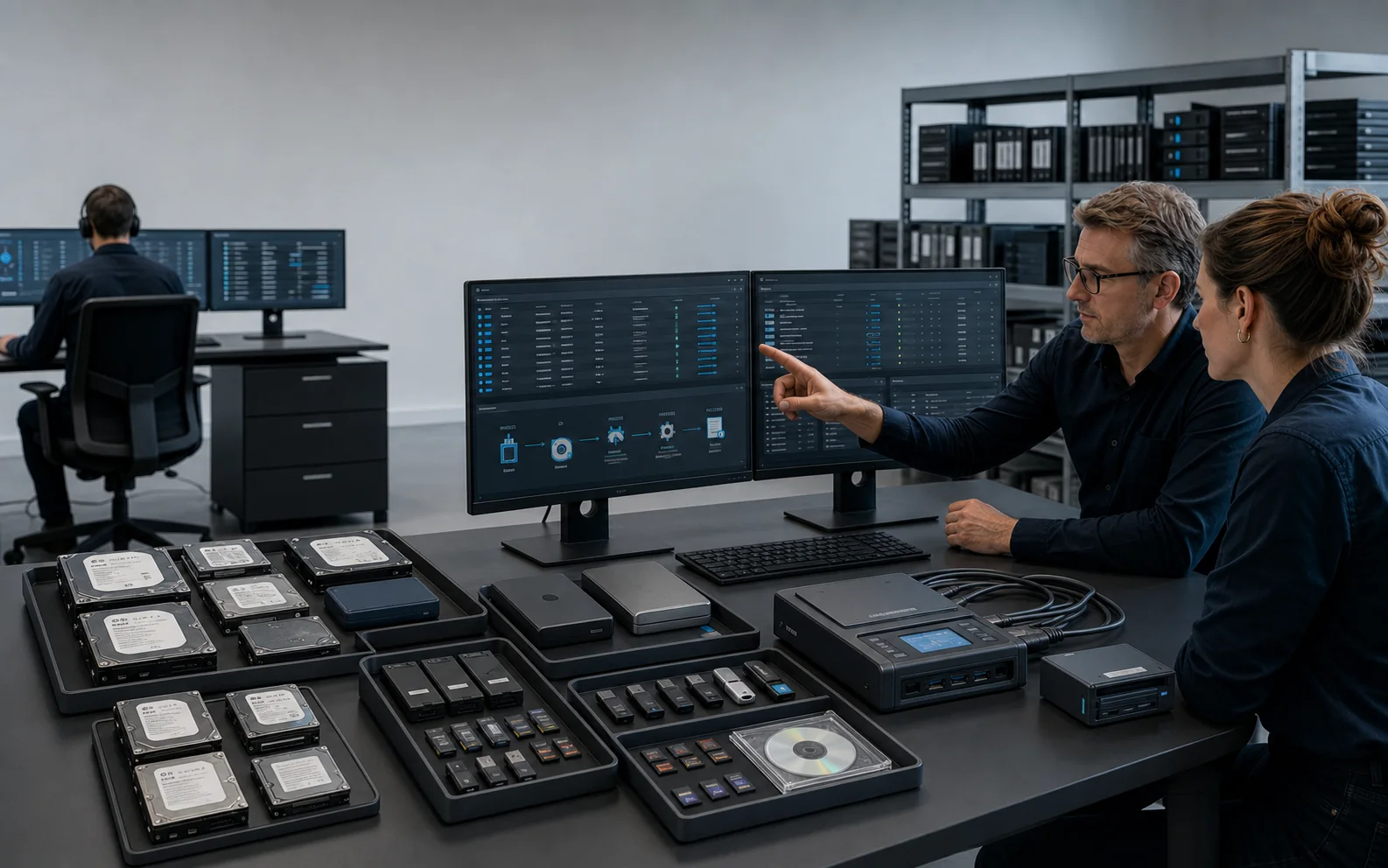
Inference, embeddings, vector store and suitable fine-tuning on local or segregated GPU infrastructure.
Classification, extraction, description, routing and search with the right technique for each task.
Evaluation sets, confidence thresholds, model cards, human review and drift monitoring.
question, risk and success measure
rights, quality and permitted examples
rules, retrieval and model variants
model, embeddings, vector store and API
feedback, drift, versions and fallback

Correctly described records, exceptions and human corrections do not remain loose project notes. They become managed training and evaluation examples for accountable task-model testing.
Making data archival creates controlled examples of document types, metadata, exceptions and correct human adjustments. That knowledge can become rules, retrieval, classification or extraction models and be reused later.
The context layer can find documents and help determine who holds knowledge or responsibility.
Approved examples, edge cases and measures per task.
Model or configuration, prompts, taxonomy, model card, licences and results.
API, vector store, logging, access rules, monitoring and fallback.

Inside the organisation's infrastructure the model can classify, extract fields, propose metadata and send low confidence to a review queue. The authorised user remains in control.
Not only chat, but also extraction, embeddings, vector index, inference, logs and optional fine-tuning can remain within agreed infrastructure. Hardware and model licences are assessed first.
We align the route with recognised standards and specifications where they fit the source, destination and customer responsibility. This is never presented as automatic certification.
Yes, depending on the task, chosen models and hardware, extraction, embeddings, vector store, inference and optional fine-tuning can run locally.
No. We choose the smallest demonstrably suitable solution: rules, retrieval, prompts, an existing local model, fine-tuning or a task-specific classifier or extractor.
Yes, when roles, processes, sources and access rules are sufficiently recorded. The assistant can connect answers to controlled documents and responsible functions or teams.
Start with one source, one process or a read-only assessment. We will define what should remain local, what evidence is required and which route creates value first.