Every collection, file environment or archive requires a different combination of preparation, processing and delivery.
Approach
A good approach starts with what your information needs to do later
2dA does not work from a standard scanning process, but from material, structure, risk, use and the digital outcome you need. That creates a route that fits your archive, collection or file environment. Restorers, archivists, junior archivists, ICT specialists and programmers review the question from the start.
Inventory and preparationQuality and metadataWorkable delivery
Why this matters
The question behind the project determines the right route
Sometimes a route starts with storage, sometimes with restoration, sometimes with scanning on demand and sometimes with metadata, privacy or archive processing. That is why 2dA first looks at what has to work later in management, retrieval and use.
What 2dA adds
Work floor, technology and output in one approach
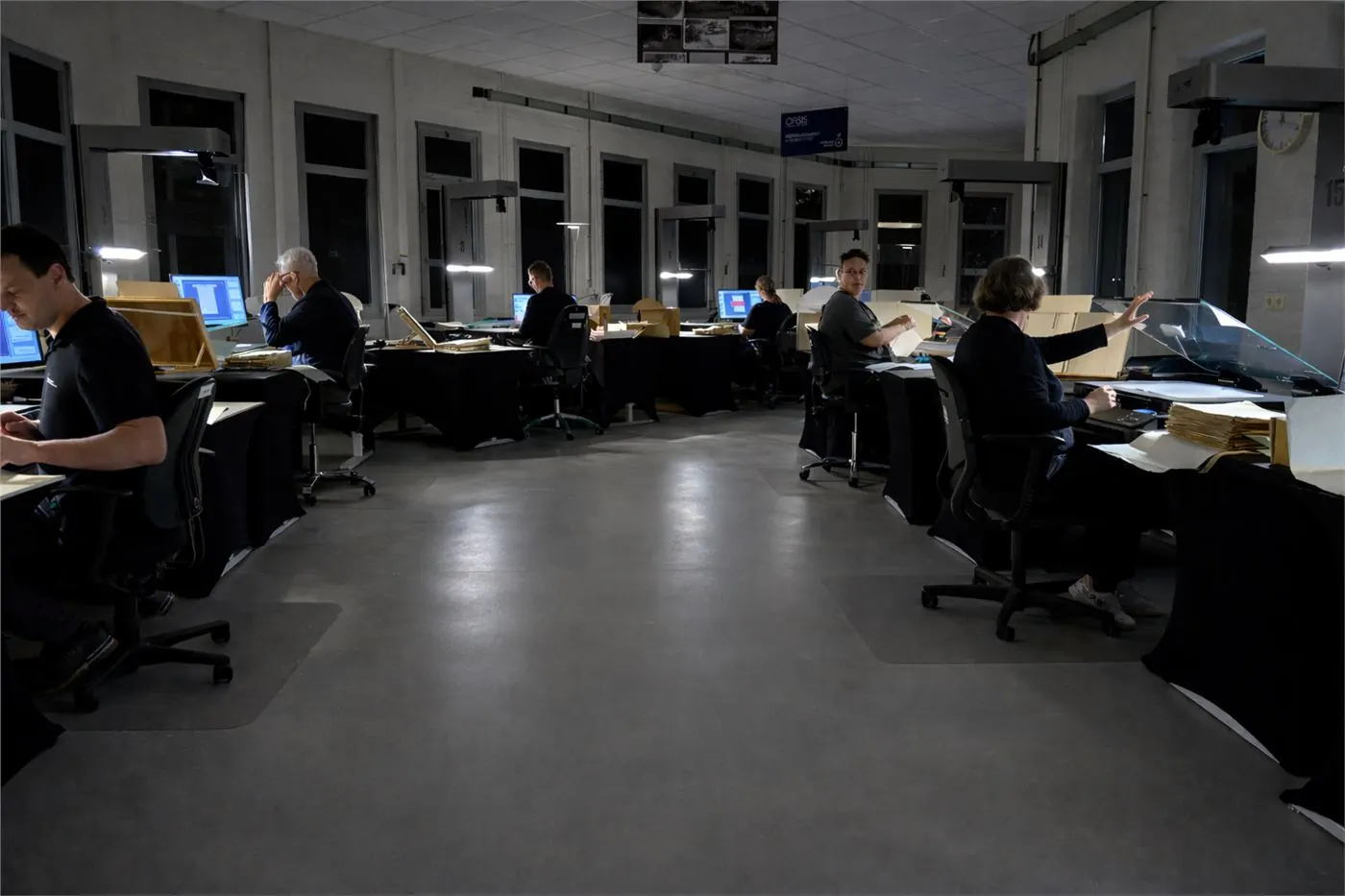
In-house scanning lines, on-site execution, restoration, archive processing, metadata, storage and AI are not offered as separate parts, but as connected steps in one logical route. Precisely because restorers, archivists and technical teams can review together, assessment and execution align more strongly.
Preparation, metadata, privacy, scan logic and control are addressed early in the route.
The outcome must not only be deliverable, but also usable for management, retrieval, e-depot and AI applications.
Starting point
Tell us not only what you want digitised, but above all what has to function afterwards
2dA helps organisations not only digitise material, but also store it logically, keep it retrievable, describe it properly and deliver it in a way that works in daily practice. That demands more than production alone: restorers assess condition and risk, archivists and junior archivists safeguard context and description, and ICT specialists and programmers make sure systems and software match that substantive route.
This means the approach is driven not by production alone, but by the final information need.
The red line
Not a loose scanning question, but a route from physical material to digital usability
At 2dA, archive storage, selection, restoration, scanning, metadata, privacy, retrieval logic and further development align with each other. That keeps the digital result logically usable later on.
1. Inventory
We start with the substance of the question. What kind of material is it? How is it ordered? Which risks, volumes, special cases or sensitivities are involved? What later needs to be findable, shareable, searchable or transferable?
- map material, condition and ordering
- determine volumes, sensitivities and exceptions
- sharpen the intended use case and digital outcome
- choose the logical route for processing and delivery
By asking these questions early, the right approach becomes clear much faster.
2. Preparation
A great deal of quality is won before the first scan. In this phase we look at selection, ordering, condition, privacy, metadata, naming, unusual formats and the way material is made workable for processing.
- selection and physical preparation
- include description, context and metadata
- address privacy and special risks beforehand
- make logical working agreements for execution and control
Good preparation prevents rework afterwards and makes the route more controllable.
3. Execution
During execution, 2dA safeguards not only production speed, but above all content quality. That means attention to image quality, completeness, file logic, file structure, OCR where useful, metadata and additional processing.
- scanning in-house, at the customer site or hybrid
- quality control during the process
- handling of deviations and exceptions
- linking production to content requirements
Especially in this phase it must remain clear whether the result still aligns with the goal of the project.
4. Delivery and follow-up
A digital delivery is only successful when it is usable. That is why we look not only at file formats, but also at structure, naming, searchability, transfer, management and follow-up steps around access.
- deliver files, folders and metadata logically
- align with storage, retrieval or platform use
- prepare for transfer, e-depot or enrichment
- leave room for AI, retrieval and further development
This means the outcome is not only delivered, but also practical to use.
Which production model fits best?
Practice differs per organisation. Sometimes working from 2dA's scanning lines is the most logical choice, for example with larger volumes, fragile material or routes where restoration and digitisation need to be closely connected.
- central processing within 2dA
- execution on site with the customer
- hybrid collaboration with your own scanners or platforms
- support on process, metadata, quality control and further development
This allows the route to fit logistics, security, privacy and the desired degree of control.
Why this way of working works
A clear process reduces risk, speeds up decision-making and makes better content choices possible. You get fewer surprises during execution, more control over quality and a digital result that logically builds on the aim of the project.
- more control over quality and planning
- less rework afterwards
- better alignment with daily use
- stronger basis for e-depot, retrieval and AI
This is relevant for heritage collections, archives, building files, administrative series and privacy-sensitive file environments.
FAQ
Frequently asked questions about the approach
Does 2dA work with a standard process?
No. 2dA starts from material, use, risk, metadata and the desired digital outcome. The route is therefore tailored in content terms.
Can the approach start small?
Yes. A pilot can later grow into bulk digitisation, scanning on demand, metadata enrichment, storage or further process support.
Is the approach also suitable for existing customer environments?
Yes. 2dA can also support environments where scanners, systems or in-house processes are already present.
Do you want to avoid making the project too technical or too heavy?
Let us review the material, workflow, volumes, privacy requirements and desired digital outcome early. Then we can determine what is really needed and which route leads fastest to a usable solution.
Next step
Why this works
A good approach turns digitisation into a workable route instead of a separate production project
2dA connects inventory, preparation, execution, metadata, quality control and delivery into one coherent process. This keeps the outcome not only tidy, but also usable for management, retrieval, storage, transfer and further digital development.