FOI requests, citizen requests, information management under control, transfer, destruction and lack of capacity require practical support.
Sectors
Different sectors require different choices in archives, files and digital accessibility
2dA does not work from a generic market proposition, but from the substantive differences between archives, heritage collections, public-sector information and document-intensive file environments.
Municipalities and governmentArchives and heritageFile environments
Why this matters
Context determines the right route
Privacy, metadata, material type, accessibility, FOI requests, e-depot, retrieval processes and use goals differ strongly per sector. That means the approach also has to differ.
What 2dA adds
One partner across the whole chain
From restoration and archive processing to scanning, storage, access, process support and AI on your own data: 2dA connects execution, content and technology in one route, supported by a platform developed fully in-house.
Preservation, quality control, description, metadata, scanning on demand, ingest and e-depot readiness require specialist knowledge.
Confidentiality, speed, structure, compliance and safe use of AI on your own data require a different digital setup.
The red line
A different context each time, but the same demand: information has to remain usable
Whether it concerns municipal files, heritage collections, water authority archives or notarial document environments, information must remain findable, explainable, manageable and sustainably accessible.
That is why 2dA looks not only at digitisation, but also at structure, metadata, processes, storage, transfer and future AI deployment.
Practical difference
The solution has to fit material, workflow and risk
A heritage collection requires something different from an FOI-sensitive public-sector environment. A notary office requires something different from a regional archive. That translation to practice makes the difference in quality and executability.
Municipalities, district municipalities and implementation bodies
For municipalities and implementation bodies, information management increasingly revolves around speed, accountability and executability. Citizens request documents, FOI requests increase and the pressure to organise information management properly keeps growing. That is exactly why it matters that 2dA not only executes, but also brings a platform developed fully in-house that can run locally or in a hybrid setup.
- support with citizen requests and document retrieval
- clearing backlogs in archive processing, description and digitisation
- preparation for destruction, transfer and e-depot
- logical file formation and better metadata for daily practice
- scanning on demand as support for internal processes
View scanning on demand for public-sector processes
View FOI, citizen requests and reading room workflows
View digital mailroom and mail digitisation
View the in-house software platform
Regional archives and archive institutions
Archive institutions deal with ingest, quality control, metadata, digital transfer, description backlogs and the need to keep collections digitally usable and sustainably accessible. With its own platform, 2dA can therefore support not only scanning, but also intake, prioritisation, quality control and delivery in a more workable way.
- strengthen archive processing and description
- build, recover and enrich metadata
- support digital transfer and e-depot preparation
- improve scanning on demand and digital availability
- explore AI-supported access on a strong content basis
View archive processing and description
View scanning on demand for public and retrieval workflows
Water authorities and information-intensive public organisations
Water authorities and similar organisations need to combine reliable archiving with sustainable information management, digital accessibility and alignment with daily management processes.
- improve structure and metadata for better management
- make documents easier to find for internal processes
- prepare for archive law, FOI and transferability
- connect hybrid archives logically to digital workflows
Notaries, law firms and confidential file environments
Legal environments require fast and reliable findability, controlled access, long retention periods and safe use of technology. That requires a different approach than open heritage environments.
- digitise confidential files and structure them logically
- support long-term storage and controllable consultation
- process or anonymise privacy-sensitive information responsibly
- apply local AI solutions on your own data within your own control
Heritage institutions, libraries and museums
Here preservation, context, presentation quality, description and digital access come together. Not only the capture matters, but also how a collection is later understood, managed and researched.
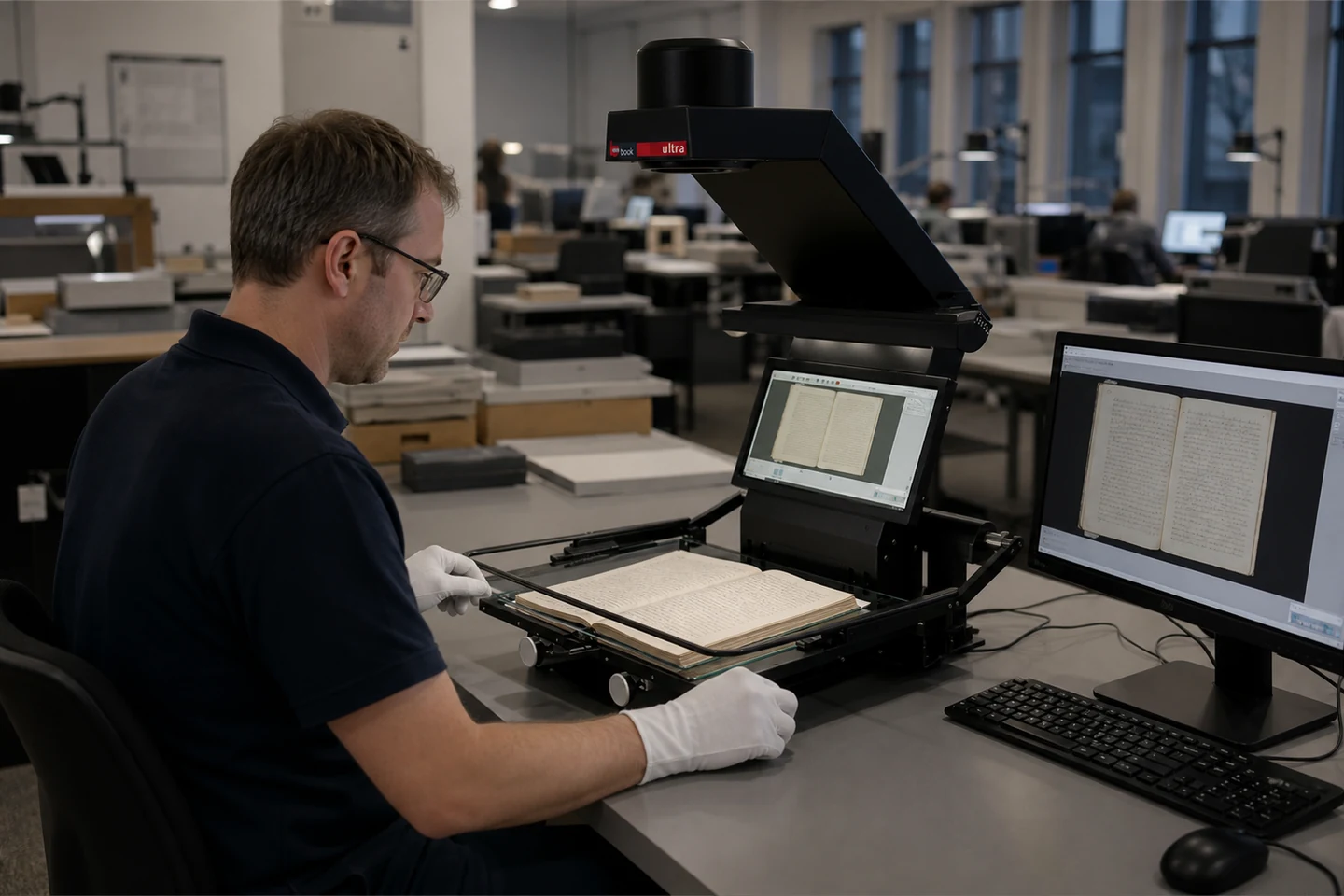
- careful digitisation of fragile material
- restoration and preparatory treatment where needed
- description, metadata and context for sustainable usability
- digital accessibility for management, research and public use
Companies with large file and document environments
Companies often deal with historical files, contracts, project archives, technical documentation and operational document flows. Then the focus is on speed, overview, compliance and usability in day-to-day practice.
- digitise corporate archives and files logically
- improve access to document flows and speed up retrieval processes
- prepare information for retrieval, AI and semantic search applications
- bring historical value and operational usability together
View corporate archive digitisation
View large-format drawing digitisation
View digital mailroom and mail digitisation
FAQ
Frequently asked questions about sectors and approach
Does 2dA only work for archives?
No. 2dA also works for municipalities, water authorities, heritage institutions, notaries, law firms and organisations with large file environments.
Does each sector require a different way of working?
Yes. Material, privacy, metadata, use, storage and accessibility differ per sector. That is why the approach is always tailored in content terms.
Can 2dA combine multiple questions at once?
That is precisely one of its strengths. Archive processing, digitisation, scanning on demand, storage, e-depot preparation and AI can all be connected in one logical route.
Would you like to know which route best fits your sector?
We are happy to help determine which combination of archive processing, digitisation, metadata, storage, e-depot preparation or AI best fits your sector, material and workflow.
Why this works
The sector differs, the chain remains
Whatever reaches an organisation in archives, information management, e-depot, digitisation or AI: 2dA has the people, systems and knowledge in-house to make it executable.
That is exactly why the sector approach at 2dA is always connected to the whole information chain: from restoration and archive processing to storage, access and AI on your own data. That line is also supported by a platform that 2dA develops fully in-house and can configure locally or in hybrid form.
New growth routes
Where potential clients should find 2dA earlier
Many organisations do not search directly for archive digitisation. They search for their own problem: FOI pressure, substitution, backlogs, AI-ready data, digital source data, metadata or information governance.