Linear metres, files, pages and exceptions define the production base.
Archive digitisation costs
What does archive digitisation cost?
A fair starting point: archive digitisation often starts at a few hundred euros per linear metre, but a fixed metre price says little without context. The final cost depends on preparation, material type, volume, metadata, OCR or HTR, privacy measures and the digital delivery that has to remain useful afterwards.
Cost indicationCost factorsScenarios
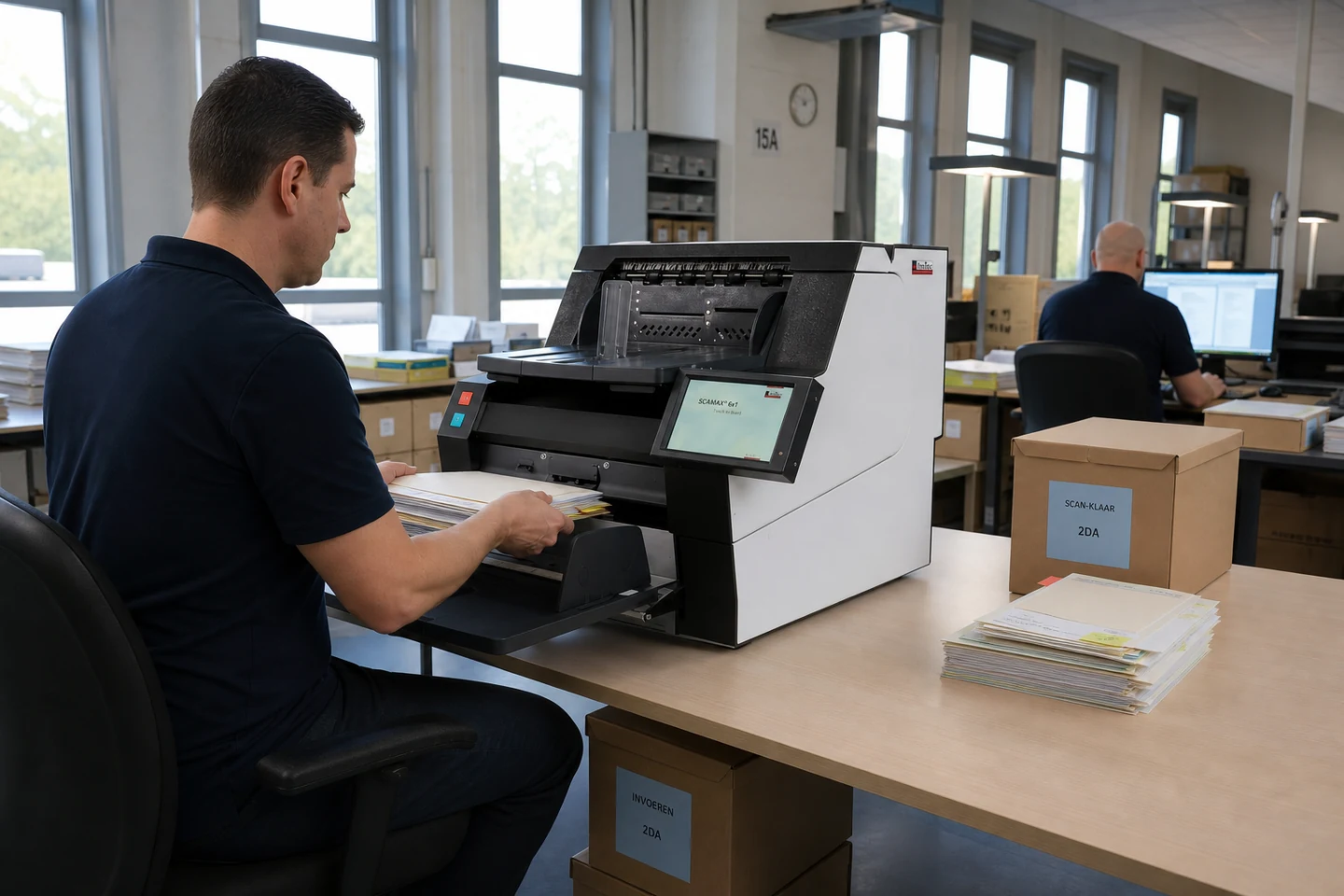
Why costs differ
Not every metre of archive requires the same work
Orderly files, fragile registers, drawings and privacy-sensitive dossiers each need a different preparation, scanning and control route.
Key question
What should the digital result be able to do?
Storage, retrieval, full-text search, anonymisation, transfer or later AI use: the required use influences cost as much as volume.
Selection, ordering, repair and barcodes can matter more than scanning alone.
Findability per file, series or item requires more than image files.
PDF/A, OCR, HTR, file structure, delivery and storage determine practical value.
Direct answer
Price the usable outcome, not only the metre
For simple, well-ordered bulk digitisation, a linear-metre indication can be useful. As soon as metadata, privacy, OCR/HTR, fragile material or a specific delivery structure is involved, the price is determined by the full combination of steps.
Quotation basis
A reliable price starts with a short inventory
Volume, material type, ordering, condition, quality requirements and required output usually provide enough information for a realistic range. A pilot batch can help when the material varies strongly.
What determines the cost?
- volume in metres, boxes, files or pages
- material type, format and fragility
- preparation, selection, ordering and restoration
- image quality, colour, resolution and quality control
- metadata, naming, file structure and indexes
- OCR, HTR, searchability and AI-ready source data
- GDPR, anonymisation, authorisations and secure handling
- digital delivery, storage, retrieval route or platform integration
When does it become cheaper or more expensive?
A well-ordered archive with repeatable files is easier to process efficiently. Mixed collections, fragile material, missing structure or privacy-sensitive information require more assessment, preparation and control.
These six details allow 2dA to calculate with purpose
- the number of metres, boxes, files or digital objects
- representative photographs or a sample inventory
- material types, formats and condition
- the required scan, metadata and quality levels
- privacy, authorisation and security requirements
- the required delivery structure, integration or retrieval route
A pilot batch reduces uncertainty before production
A small, representative pilot batch shows how much preparation, processing and control is actually required. It makes assumptions visible before a large volume is scheduled and grounds the estimate in the real material.
The result is not a generic price per metre, but an explainable estimate for the required digital delivery.
Scenario 1: simple bulk digitisation
Suitable for larger series of similar files or documents. The focus is logistics, stable scanning, quality control and clear file structure.
View bulk digitisationScenario 2: structured files and metadata
Relevant when files need to be found later by person, case, number, object or period. Metadata, naming and completeness become more important.
View file digitisationFAQ
Frequently asked questions about costs
What does archive digitisation usually cost?
A first indication is often a few hundred euros per linear metre, but the real price depends on preparation, material type, metadata, OCR/HTR, privacy and the required delivery format.
Why is there no fixed metre price?
Because orderly A4 files require a different route from fragile registers, drawings, privacy-sensitive files or material that first needs selection, description or restoration.
How do you get a reliable cost indication?
A short inventory of volume, material, structure, quality requirements and required output usually gives enough information for a realistic range or quotation.
Related routes
Continue with these pages
Would you like a realistic cost indication?
Send a photo, short description or volume indication. 2dA looks at material, structure, risks and output so the price is not only attractive, but also workable later.