The digital result also needs to be findable, verifiable and workable afterwards.
Archive digitisation
Archive digitisation with structure, GDPR-aware processing and controlled quality
Organisations that digitise archives rarely need a folder of loose scans. They need information that remains findable, verifiable and usable. For archive digitisation and GDPR questions, 2dA considers selection, access, personal data, metadata and secure digital delivery from the start. We organise preparation, logistics, professional scan production, quality control, metadata, OCR/HTR where useful, GDPR-aware privacy handling and digital delivery as one coherent route.
Structure and metadataQuality controlWorkable delivery
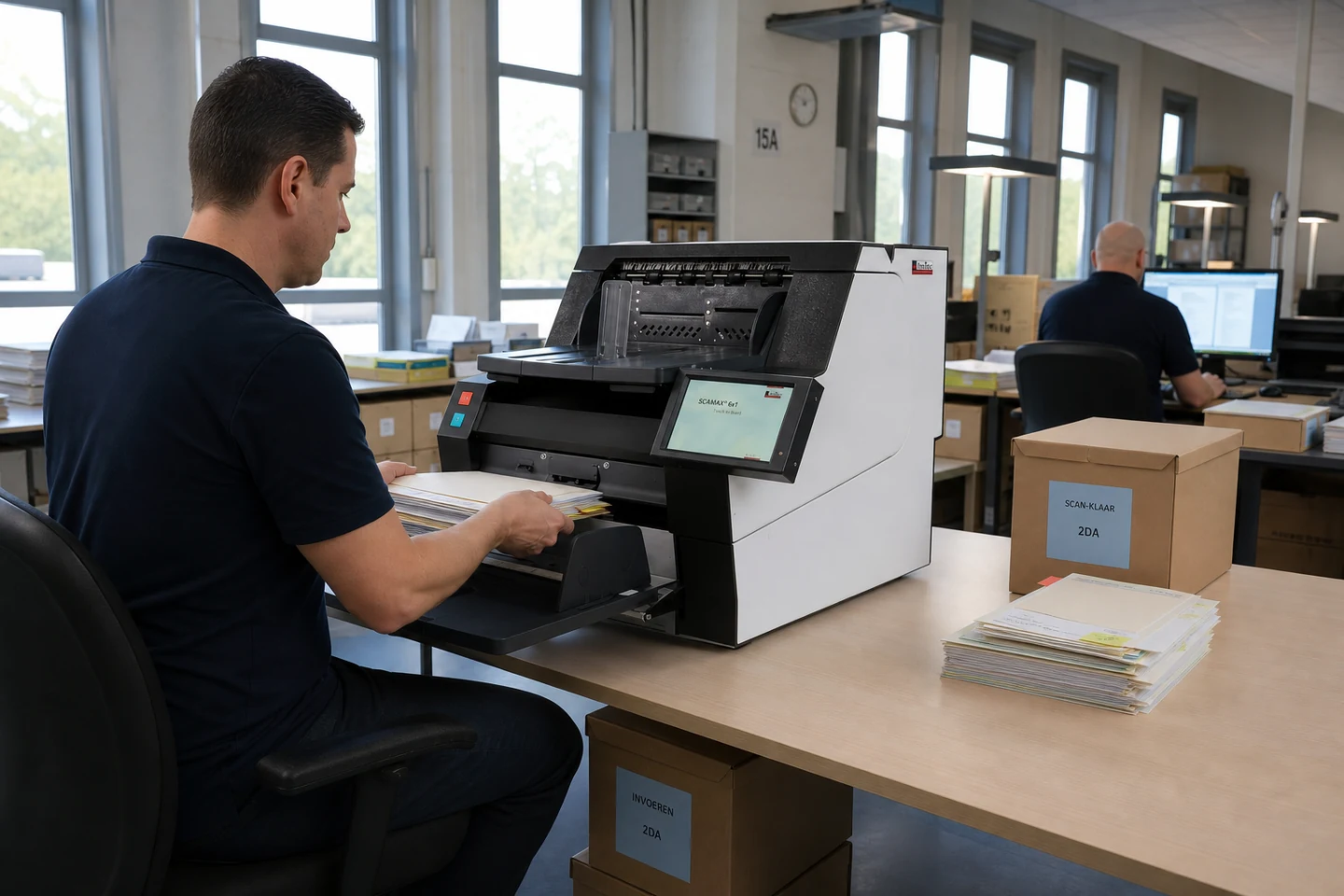
When this matters
Faster availability, less physical strain
Archive digitisation becomes relevant when information needs to be available faster, physical consultation becomes too demanding, or a collection needs to be made more widely accessible without losing internal coherence.
2dA approach
Do not start with the scanner, start with the archive
2dA first looks at structure, use case, metadata and quality level. Only then are preparation, scanning and delivery organised as one logical whole.
Selection, structure and metadata determine whether digitisation will keep its value later.
For larger archive flows, scanning lines, logistics and quality control are set up for stable throughput.
Not loose scans, but a delivery that connects logically to governance and consultation.
In practice
Digitising an archive requires coherence in every step
We first map material, structure, risk, use and desired output. We then organise preparation, scanning, quality control, OCR where useful, HTR for handwriting or pages where that truly helps, metadata and delivery in a logical way. That keeps the trajectory manageable even at larger volumes.
Why this works
The digital environment needs to be just as logical as the archive itself
What later needs to be findable, recognisable and consultable already determines early on how files, folders and metadata should be structured.
How 2dA approaches the trajectory
- mapping material and structure
- determining risks and exceptions
- organising preparation and scanning logically
- aligning metadata and naming with use
- matching digital delivery to governance and access
What you get back
You do not get a loose folder full of scans, but a digital delivery that is logically usable. Files match the chosen structure, metadata helps find what is needed quickly, and quality is aligned with the collection's intended function.
Also for archives with operational value
Corporate archives and administrative archives often come with additional requirements around retention obligations, verifiability and daily consultation. That is why 2dA safeguards not only image quality, but also ordering, naming, completeness and transferability.
Not every archive needs the same route
Some archives require central processing, others on-site work or a hybrid model with in-house scanners and support from 2dA.
FAQ
Frequently asked questions about archive digitisation
Is digitisation the same as scanning?
No. Digitising an archive also requires selection, structure, metadata, quality control and workable delivery.
How does archive digitisation relate to GDPR and privacy?
For files containing personal data, 2dA considers selection, access, metadata, anonymisation where needed and secure digital delivery from the start. GDPR-aware processing is therefore part of the route, not a loose final check.
What determines the cost of archive digitisation?
Costs mainly depend on volume, material type, preparation, required image quality, metadata, OCR/HTR, privacy measures and the way the digital delivery will be used. A realistic cost estimate therefore starts with understanding the material, quality requirements and intended output.
When is metadata needed?
Almost always when information later needs to be found again by file, series or component.
Can this also be done on site?
Yes. Depending on logistics, use and vulnerability, 2dA can also work on site or in a hybrid model.
Do you want to know which digitisation route fits your archive?
Let 2dA review the material, volumes, vulnerability, metadata, required output and intended use. That quickly clarifies whether central production, on-site digitisation or a hybrid route is most logical.
Next step
Why this works
Digitisation only gains value when archive structure and information use move together
By organising scanning, metadata and digital delivery as one route, 2dA turns archive digitisation into a workable information solution.