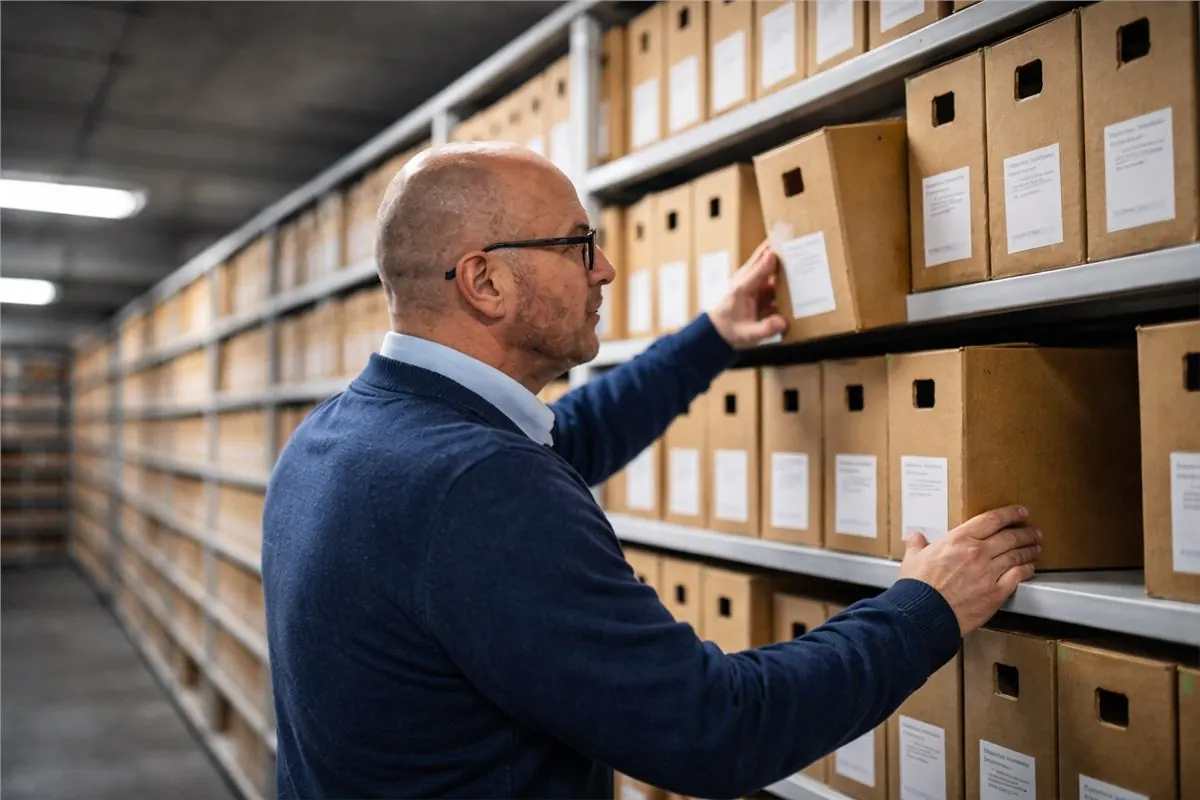
Archive storage only works comfortably when series, boxes, files and exceptions are placed logically and can later be found again without search effort.
Archive storage
Archive storage with secure preservation, fast retrieval and digital access
Archive storage is only truly well organised when you can still know what is where, which files may be retrieved, what should become digitally available and which material can eventually be selected or destroyed. 2dA therefore does not organise storage as a separate box room, but as part of a workable information chain.
Secure archive storage
Scanning on demand
Metadata and retrieval
Why this matters
Storage must remain explainable years later
Calm management only appears when box, location, file context, retention period, retrieval route and digital availability remain connected. That is where ordinary storage often starts to strain.
How 2dA looks at it
Not only space, but control over the whole route
Archivists, restorers, IT specialists and programmers look at selection, ordering, registration, retrieval, metadata, scanning on demand, digital delivery and where needed preparation for destruction or transfer.
Material must be retrieved for staff, citizens, researchers or clients without the organisation having to search or improvise again.
Locations, metadata, scans, OCR/HTR, AI agents and file context should reinforce each other. Otherwise manual work, doubt and loss of overview return later.
Storage in practice
From depot aisle to retrievable file
Good archive storage proves itself not on the day material is put away, but when someone needs it. Then it must be clear where it is, what its status is, who may use it and whether digitisation is smarter than physical consultation.
As soon as boxes, locations and file context align logically, management becomes calmer and the basis for digitisation, scanning on demand and daily consultation becomes much stronger.
Preservation and use
Secure preservation becomes stronger with digital availability
A depot solution must be safe and orderly, but also continue to function for retrieval, selection, scanning on demand, metadata linking, destruction obligations and digital access. That coherence is what makes storage workable over the long term.
External archive storage without losing control
External archive storage becomes attractive when internal space is scarce, depots are fragmented or files need to be preserved securely outside the organisation's own location. The key condition is that the organisation keeps control: which boxes were transferred, which files can be retrieved, which retention periods apply and which authorisations belong to them?
2dA helps organise external storage so that physical preservation, registration and digital access reinforce each other. This keeps document storage controllable for staff, compliance, audits, information requests, client questions or later digitisation.
Document storage for files that must remain reliably findable
Document storage requires more than moving boxes. Contracts, personnel files, project archives, building files, board documents or client files each have their own sensitivity, retention period and retrieval logic.
- registration at box, file or series level, depending on use
- agreements on who may retrieve, view, scan or destroy material
- packaging and placement that match format, condition and consultation
- clear status information for active, semi-static and closed files
- a route for urgent retrieval, digital delivery and controlled return placement
Secure storage, compliance and retention periods
Archive storage often touches GDPR, internal authorisations, audit trails, retention obligations, destruction obligations and agreements about confidential information. That is why it must be clear from the start which data is stored, who has access, how retrieval is logged and when destruction or transfer is due.
For secure storage, 2dA looks at both the practical and content side: ordering, metadata, privacy-sensitive information, retention periods, selection rules, destruction lists, proof of execution and alignment with existing information processes.
The process: from intake to retrieval and destruction
A storage route becomes stronger when the steps are clear in advance. First we map volume, ordering, use, risks and desired retrievability. Then we propose a route for registration, packaging, placement, metadata, retrieval agreements and possible scan flows.
- intake and assessment of archives, document flows and retention periods
- clean-up, ordering or labelling where needed for reliable storage
- registration of location, box, file context and possible restrictions
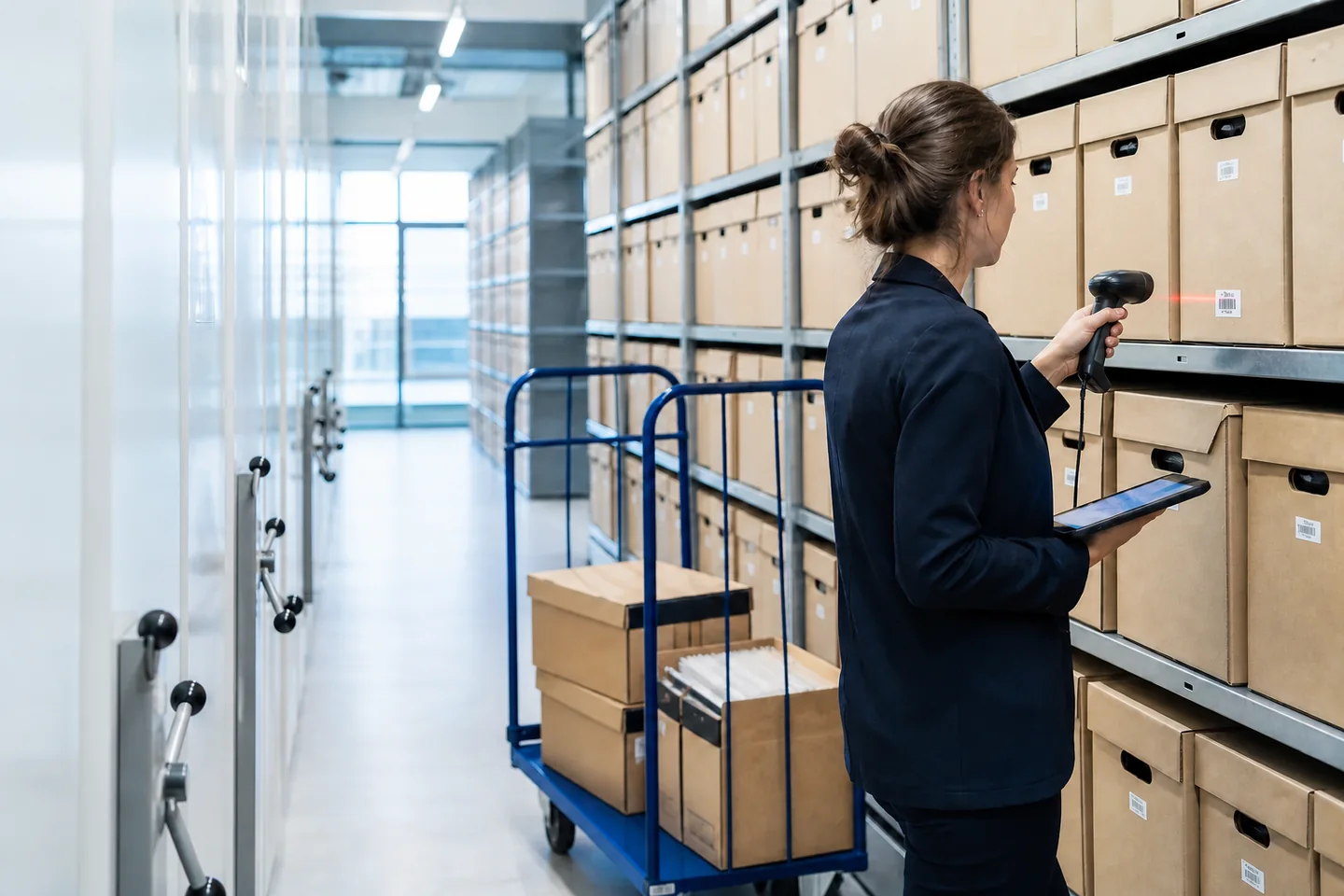
- retrieval process for physical consultation, scanning on demand or digital delivery
- periodic checks on retention periods, selection, transfer or destruction
How archive storage stays workable when something has to happen later
A good storage route does not end with putting material away. It also has to keep working later for retrieval, digitisation, daily consultation, selection, destruction, control and transfer.
- inventory and interpretation of series, boxes and exceptions
- ordering, packaging and logical placement of material
- registration and links to metadata and inventory information
- setting up calm retrieval and return routes
- alignment with scanning on demand, OCR/HTR and digitisation
- preparation for retention periods, selection rules and destruction
- extension into management, audit trails, AI-ready data and digital availability
This means archive storage is not limited to physical preservation, but becomes a workable link in the entire information chain.
What good archive storage should deliver in practice
Many organisations notice that storage only feels right when more is in order than just the space. As soon as retention, metadata, retrieval, digitisation and daily consultation come together, it becomes clear whether a storage structure will work over the longer term.
- clear links between box, location and file context
- workable retrieval routes for daily practice and peak loads
- a strong basis for scanning on demand and follow-up routes
- more calm in management and less loss of time or context
- better alignment between depot and digital information environment
- better supported choices around preservation, digitisation or destruction
Situations in which this storage approach works well
Not every storage question looks the same. Sometimes it concerns transferred archives, sometimes corporate archives with retention requirements, and sometimes a hybrid situation in which physical storage and digital access flow directly into each other.
Archive services and heritage institutions
For collections that must be managed safely, retrieved responsibly and kept logically linked to digitisation and public use.
Municipalities and public bodies
For archives that have to remain organised and accessible, even when FOI requests, citizen requests, retrieval and scanning on demand increase.
Corporate archives
For organisations that want control over contracts, project files, personnel or client files, audit trails and retention periods without losing overview.
Hybrid environments
For routes in which physical depot management, digital files, metadata and temporary selections or scanning routes continue to coexist.
Why archive storage is more than a depot issue
Once retrieval, digitisation, metadata, retention periods, destruction obligations or daily consultation play a major role, storage is no longer a separate facility choice but part of the management route.
Fast retrieval without disturbance
Material must move out of storage quickly and under control, or be digitised immediately when that is faster, safer or more efficient for the user.
Digital linkage with context
Location data, box levels and digital file information must move together so that physical and digital strengthen rather than disrupt each other.
Preparation for follow-up routes
Good archive storage makes later digitisation, scanning on demand, metadata improvement, AI agents on own archive data and transferability more consistent and calmer to execute.
What 2dA connects archive storage to in practice
At 2dA, storage is not viewed separately from the rest of the information chain. That is where the added value lies: archive storage, depot management, metadata, scanning, software, digital availability and content assessment are organised as one logical line.
- selection and ordering before storage or relocation
- links between physical placement and metadata
- support for retrieval processes and return placement
- scanning on demand from the same management logic
- alignment with archive digitisation, OCR/HTR and further access
- support from an in-house developed software platform
- more control over retention, monitoring, destruction and audit trails
What organisations notice in daily practice
Good archive storage does not only create calm in the depot, but also noticeable gains in daily consultation, clearer processes and less loss of context when material is needed again.
- clear placement logic and less search loss
- faster, more reliable retrieval for staff, citizens, clients or researchers
- stronger digital links between storage and systems
- more control over exceptions, peaks and return flows
- a stronger basis for follow-up routes in digitisation, management and AI applications
Store, digitise or both?
Many organisations do not immediately know which route fits best. Should the archive mainly be preserved safely? Does part of it need to be available quickly for staff or citizens? Or is it smarter to combine storage directly with scanning on demand?
Storage only
Logical when material is rarely consulted, but still needs to be stored securely, findably and under control.
Storage with digital retrieval
Strong when files are needed regularly, but full digitisation is not yet necessary or proportionate.
Storage as the start of digitisation
Logical when metadata, selection, OCR/HTR, AI-ready data or digital availability become important later.
What determines the cost of archive storage?
The price of archive storage is not only determined by the number of boxes. The real question is how much control, retrieval and digital alignment are needed. That is why 2dA looks at the whole situation before advising a suitable route.
- volume, format and physical condition of the material
- level of ordering, packaging and registration
- how often files or items need to be retrieved
- metadata, inventory information and links with systems
- need for scanning on demand or full digitisation
- selection, retention periods, destruction or transfer
A realistic cost estimate therefore separates storage costs, one-off intake or ordering costs, retrieval costs, scan or delivery costs and possible costs for selection or certified destruction.
Define in advance what happens when someone needs a file
A workable retrieval route covers at least the request details, authorisation, location, required delivery time, physical or digital delivery, quality control, registration and return. Specific service levels are agreed for each collection and use case; 2dA does not present a generic response time that may not fit the material or organisation.
Each retrieval should remain explainable afterwards
- which box or file was consulted
- who was authorised to request it and which route was followed
- whether the original was removed or a digital copy supplied
- which checks and return actions were completed
- which exceptions or follow-up actions were recorded
The exact registration aligns with the client's privacy, retention and audit requirements.
What information is needed for a storage proposal?
An outline inventory helps tailor storage and retrieval to your organisation. You do not need to share confidential files at this stage.
- Volume: approximate box numbers or linear metres, including unusual formats.
- Arrangement: available inventories, box references and packaging condition.
- Use: who needs the records, how often, and whether physical or digital delivery is required.
- Transfer: location, timing, registration and arrangements for returning records.
Physical archive storage or digital data storage?
This service covers storing and retrieving physical archives. Digital copies can be provided through scanning on demand. Managing digital files requires different agreements on formats, access, integrity and transfer.
Need storage for digital files? Explore digital data storage. If files first need to be organised, described and prepared for archiving, see 2dA BronVast.
Choosing between storage, digitisation or both? Our archive storage and digitisation decision guide helps compare the options.
FAQ
Frequently asked questions about archive storage
When is external archive storage a good choice?
External archive storage fits when internal space is scarce, files need to be preserved securely outside the organisation's own location, or when storage, retrieval, digitisation and destruction can be organised better centrally.
What is the difference between archive storage and document storage?
Document storage often concerns concrete files that are still retrieved, while archive storage looks more broadly at series, retention periods, selection, context and long-term accessibility. In practice, the two often overlap.
How does storage remain secure and compliant?
By agreeing in advance on registration, authorisations, privacy-sensitive information, retention periods, retrieval logs, scan routes and destruction. This keeps clear who has access and what happens to files.
When is archive storage more than a depot issue?
As soon as retrieval, digitisation, metadata, retention periods, selection, destruction or daily consultation play a role, storage becomes part of the management route rather than a separate facility choice.
Can archive storage connect directly to scanning on demand?
Yes. A clear route is especially important then, so that material can come out of storage quickly, be digitised under control and then be handled correctly in digital or physical form.
How does document retrieval from storage work?
Retrieval is based on agreed characteristics such as box, file, inventory number, metadata or authorisation. Depending on the request, 2dA can deliver physically, scan digitally or return the file under control.
What determines the cost of archive storage?
Costs depend not only on metres or boxes, but also on ordering, packaging, condition, retrieval frequency, metadata, digitisation, selection, destruction and desired links with systems or processes.
Is this only relevant for public archives?
No. Corporate archives, project files, contract series, technical archives and hybrid document environments also benefit from a storage structure that will still work logically later on.
Can storage be combined with selection and destruction?
Yes. When retention periods and selection rules are included properly, storage can help determine later what should be preserved, transferred, digitised or destroyed.
Can 2dA also prepare or carry out destruction?
Yes. 2dA can help with selection, retention period checks, destruction lists, approval routes and demonstrable execution, so that destruction fits policy, legislation and internal compliance.
Can storage support later AI applications?
Yes, provided the foundation is strong. Good scans, clear metadata, reliable OCR/HTR and file context make archives easier to use later as a knowledge source for local AI agents and search applications.
Coherence
Related routes
Archive storage works best at 2dA as part of a broader line in which depot management, retrieval, digitisation, metadata, selection and digital availability reinforce one another.
Do you want to know which archive storage route fits your organisation?
We are happy to look with you at depot practice, retention periods, retrieval flows, metadata, digitisation and possible destruction or transfer routes. This creates a storage route that not only looks orderly, but also keeps working later on.
Why this works
Archive storage only becomes truly strong when preservation, retrieval and digitisation fit together
From placement and retrieval to selection, metadata, scanning on demand, destruction and digital consultation: the more logical the storage structure, the calmer and more reliable the whole follow-up route will function.