Practice as the starting point
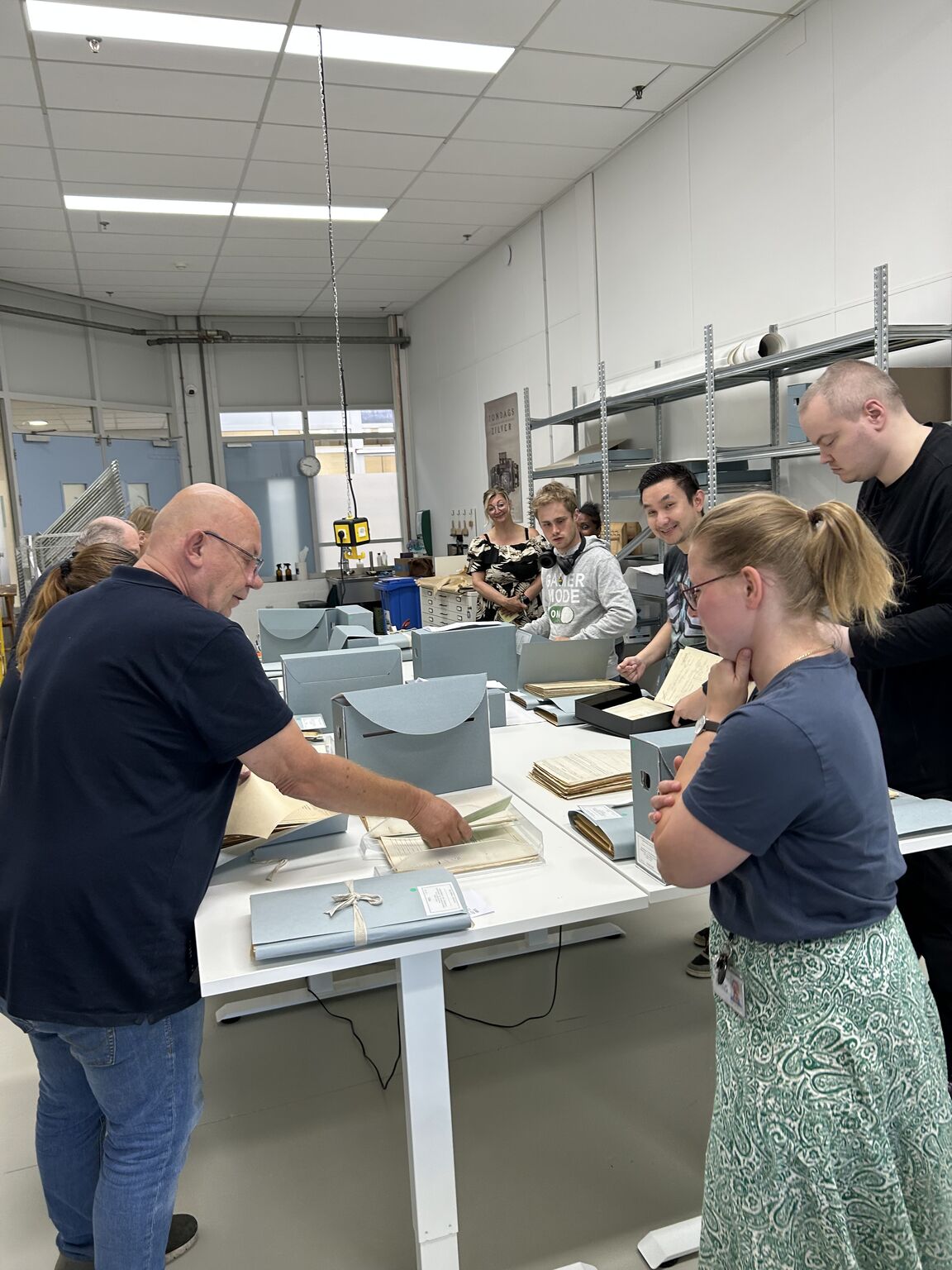
The first training round after the summer break focused on handling original archive material with care. Staff worked with vulnerable and historic documents, tears, folds, bindings, staples and other situations that can affect treatment and capture.
Context remains part of quality
The document itself is not the only consideration. Original order, document structure and recorded exceptions also determine whether a digital reproduction can be understood and used later. These choices are therefore discussed and practised during the work itself.
Small groups, focused attention
Staff are trained in several smaller groups. This leaves room to ask questions, practise actions and assess unusual situations together. The first group has started and the other groups will follow over the coming period.
A programme that continues to evolve
2dA Permanent Education is a regular part of working at 2dA. An in-house educational specialist works with subject experts to translate emerging techniques, quality requirements and project experience into clear learning material, exercises and structured learning paths.
Broader than material care
Each round has its own focus. The programme also covers new scanning techniques, image quality, metadata, OCR and HTR, privacy, artificial intelligence, data processing and digital workflows. Technology and professional knowledge can therefore develop together.
Why clients notice the difference
A careful process depends not only on equipment and procedures, but also on people who recognise exceptions and know when a different route is required. Maintaining knowledge structurally helps 2dA make day-to-day decisions more consistent and easier to explain.