Image quality, capture logic and material preparation directly influence how much recognition really delivers.
OCR, HTR and AI foundation
HTR for handwritten archives and OCR for printed text require strong image quality
Many organisations approach OCR or HTR as if the real question starts in software. In practice, reliable recognition starts much earlier: with image quality, material handling, logical metadata and a clear view of what the text should support later on.
OCR makes printed text machine-readable. HTR does the same for handwriting. HTR for handwritten archives in particular requires a careful combination of capture quality, context, metadata and realistic assessment. So this is not only a software question, but also a question of source quality, description and later use. 2dA helps organisations treat both not as isolated add-ons afterwards, but as part of a route towards better retrieval, analysis and AI on their own data.
Printed text and handwritingImage quality and metadataAI-ready source data
What OCR does
Make printed text searchable and workable
OCR is intended for printed text. It turns scans from visible images into content that can be searched, filtered and reused in workflow, access and analysis.
What HTR does
Make handwriting far more usable
HTR is intended for handwriting. In archives, registers, historic administration and manuscripts it can make the difference between browsing and actually working with the source.
OCR and HTR become truly valuable when they land in metadata, context and a usable information environment.
Strong recognition also supports chunking, embeddings, semantic search and AI on your own data.
Why image quality matters so much
Blur, skew, weak contrast, low resolution, noisy background, show-through, folds and poor lighting all introduce noise into the text. That reduces recognition quality and makes the result less reliable for later retrieval, analysis and automation.
That is why 2dA looks not only at what software can correct afterwards, but also at capture quality, material preparation and the level of quality required for the application you actually want to support.
Why this immediately affects AI
Document-based AI often builds on recognised text. When OCR or HTR is weak, chunks become noisy, embeddings become less reliable and retrieval loses precision. That does not only weaken search. It also weakens the quality of AI answers and links between records.
That is exactly why the route matters: stronger capture, better recognition, better chunks, stronger embeddings and ultimately more reliable AI on your own data.
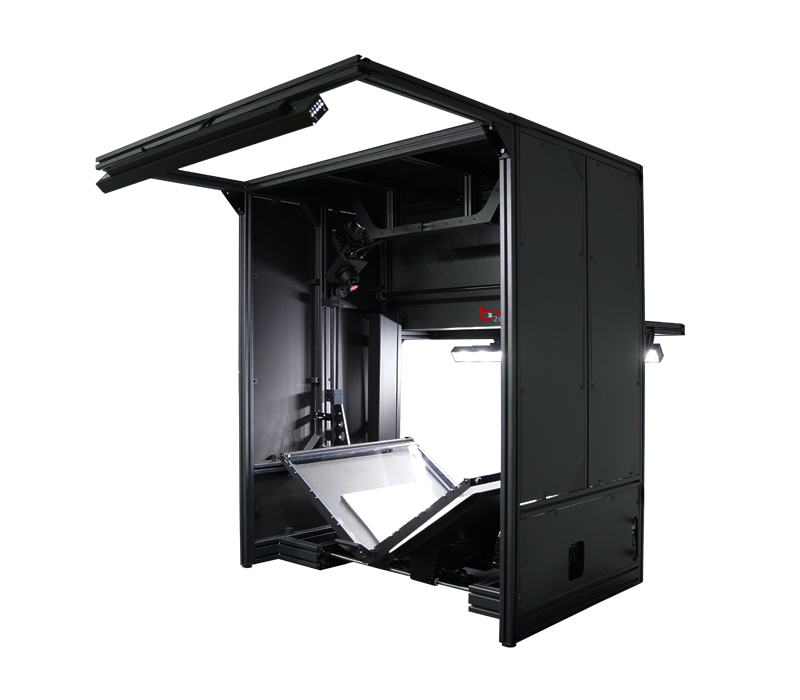
This becomes especially visible with old books, registers, newspapers and other bound collections, because opening angle, page flatness and material behaviour directly affect recognition quality and later digital usability. View the route for books, registers and newspapers.
Where this matters
Not only for heritage, but also for files and document environments
OCR and HTR do not matter only for manuscripts. They can also add value in file environments, hybrid archives, permits, citizen requests and document flows where content later needs to be searched, filtered, enriched or queried.
Why 2dA is strong here
Subject expertise, image quality and technical execution in one route
2dA combines archivists, restorers, scanning specialists, ICT specialists and programmers. That keeps OCR and HTR from becoming a tool choice alone and turns them into part of a route where capture, metadata, access and AI actually support one another.
A recognition result contains more than isolated text
- the original image as the verifiable source
- recognised text per page or text region
- a link between text, page number and source file
- confidence or quality information where the technology provides it
- an exception list for human review
This keeps each search result traceable to the image on which it is based.
A pilot set shows where OCR or HTR is reliable enough
Typeface, handwriting, language, bleed-through, skew, contrast and page layout all affect recognition. 2dA therefore assesses a representative pilot set and agrees the error tolerance, review and post-processing required for the intended use.
Recognition is not delivered as automatic truth, but as a measurable layer above the source.
FAQ
Frequently asked questions about OCR and HTR
Is OCR enough for handwritten material?
No. OCR is intended for printed text. Handwriting requires HTR, provided the source material and image quality support it.
When is HTR for handwritten archives useful?
When registers, historic administration, notes, maps, files or other handwritten sources later need to be searched, analysed or used as source data.
Is HTR only relevant for heritage collections?
No. It can also add value for registers, historic administration, notes and other handwritten sources that later need to be searched or analysed.
Why does 2dA stress image quality so strongly?
Because capture quality directly affects recognition, metadata, retrieval and AI. Weak source quality remains visible throughout the entire chain.
Would you like to know what OCR or HTR can realistically deliver in your environment?
2dA helps assess capture quality, recognition, metadata and later AI use as one coherent route, so the result becomes more than a technical experiment.