An idea that works in practice
The original idea was to develop worker-supporting technology that genuinely helps people in their daily work.
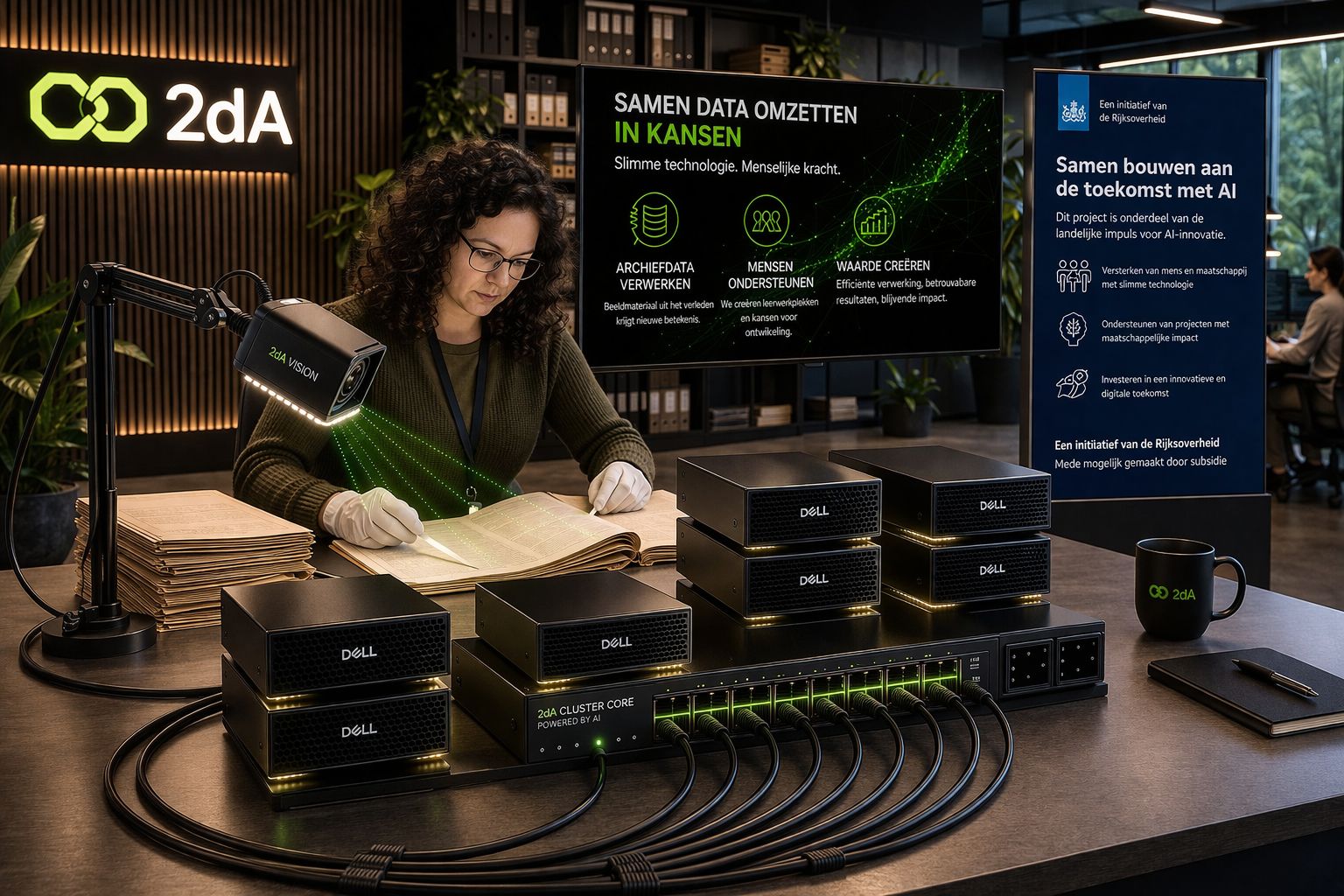
At 2dA, we built a working prototype in which computer vision and language models come together in a system that observes, understands context and supports the next step in the workflow.
Thoroughly assessed on technical merit
With that prototype, we submitted our project to a public innovation programme. A rigorous technical assessment followed, including additional questions and a second review round.
We have now received confirmation that our project is among the selected initiatives that will receive grant funding.
From prototype to robust application
That support enables us to continue building the hardware required to take a working prototype further towards a robust and scalable application.
Knowledge and development in Nijmegen
Just as important is that we can realise this next phase entirely in-house, from Nijmegen. That keeps knowledge, development and application close together and allows us to continue building technology with both practical and social value.
Technology that supports participation
For us, worker-supporting technology is about practical value: organising work more intelligently, making processes more consistent and guiding staff more effectively in execution. That is also where we see its social value: with this technology, we want to make work more achievable for people who are further from the labour market, so that more people can participate and continue to develop.
Retaining context and guiding tasks
Within the technical setup, OpenClaw also plays an important role as the central orchestration layer, where context is retained, tasks are routed and part of the handling towards the employee is supported.
That is exactly what we are continuing to build on now.