From restoration and archive processing to delivery, storage, e-depot readiness and AI readiness.
Services
Archive services that turn physical material into digitally usable information
2dA supports organisations that do not just want scans, but information that remains usable. Archive processing, restoration, scanning, metadata, OCR, HTR, storage, process support, e-depot preparation and AI on your own data are connected in one route. That happens within one organisation that brings together restorers, archivists, junior archivists, ICT specialists and programmers, supported by scalable scanning lines and a software platform developed fully in-house.
Archives and filesProduction at scaleMetadata and e-depotAI on your own data
Why this matters
Start with the information chain, not just the technology
A scan file on its own rarely solves the real problem. Only when preparation, digitisation, metadata, privacy, storage and access align does an information environment start to truly work.
What 2dA adds
One partner for execution, content and technology
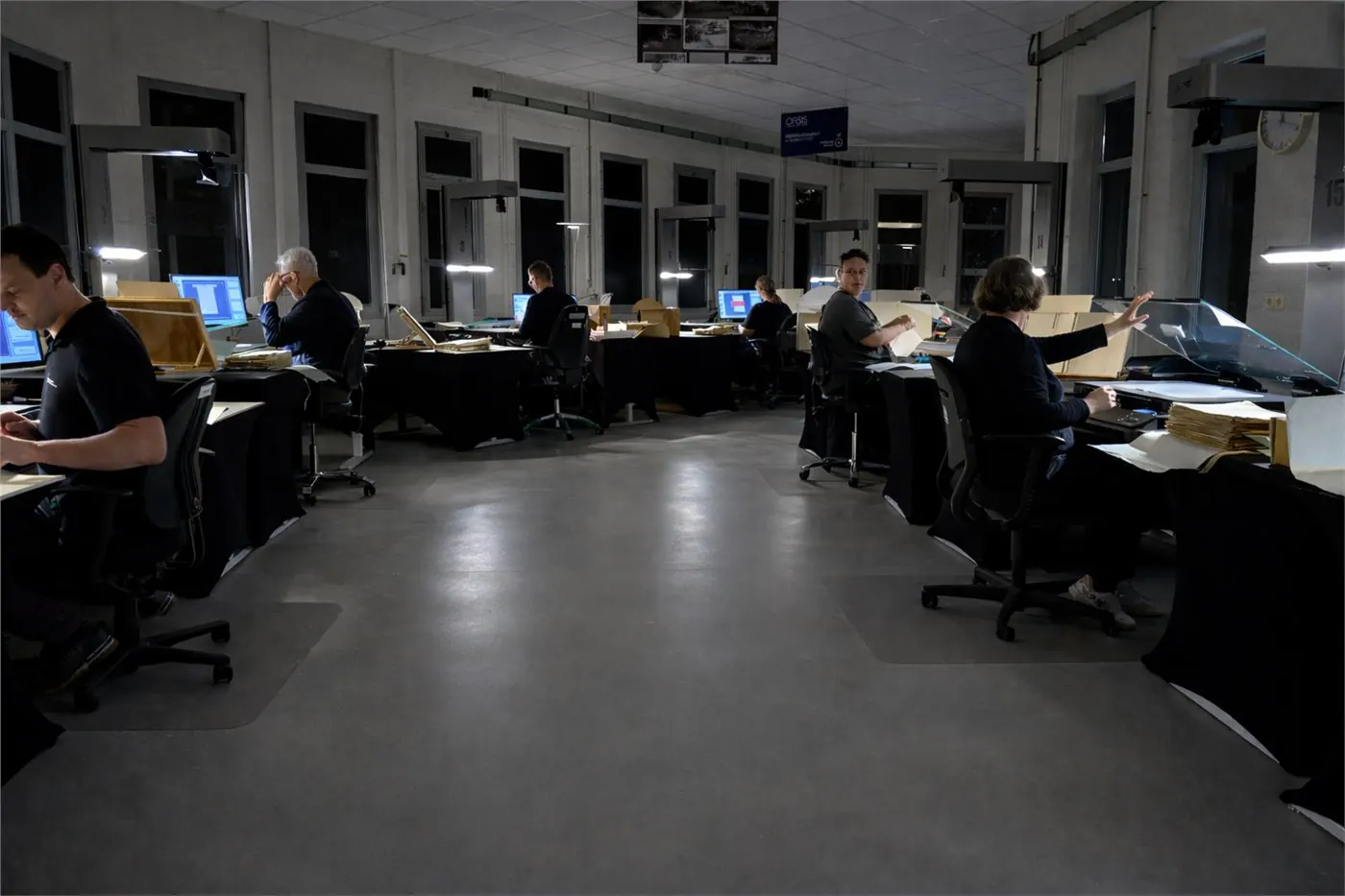
2dA combines archival knowledge, scanning and production capacity, software, platform expertise and AI support in one organisation. The production environment is set up for both fragile heritage items and large bulk flows, with scanning lines that connect volume, logistics and quality control. Restorers, archivists, junior archivists, ICT specialists and programmers therefore do not look sequentially, but jointly at the same route. Because the platform is also developed fully in-house, integrations, workflow and delivery can be aligned far more precisely than in a generic package.
Suitable for archives, heritage, municipalities, water authorities, notaries, law firms and file-intensive organisations.
No abstract consultancy, but routes that are scalable, controllable and workable in day-to-day practice.
The red line
A service is only good when the result is genuinely usable afterwards
That is why 2dA looks not only at scanning or processing, but also at ordering, metadata, OCR, HTR for handwriting or pages where that truly helps, privacy, sustainable accessibility, process support and the way information is later consulted, transferred or used for AI. The same applies to large-format drawings, technical documentation and inbound mail flows that still need to be routed and delivered logically. Because archivists, restorers and technical specialists can review that together, the assessment stays both substantive and practical.
This coherence is what makes the difference between a loose delivery and a workable digital information source.
How this works
Services connect to each other instead of existing side by side
A heritage route can start with restoration and continue into high-quality digitisation and metadata. A file-intensive environment can start with scanning on demand, archive processing or anonymisation and then build further towards storage, retrieval or local AI.
Digitisation and archive services
For organisations that want to make archives, files or collections more accessible, manageable and digitally usable.
- Archive digitisation
- Corporate archive digitisation
- File digitisation
- Building file digitisation
- Bulk digitisation
- Scanning on demand
- Scanning on demand for FOI and citizen requests
- In-house platform for scanning on demand
These services help organisations reduce backlogs, speed up workflows and make information more logically accessible.
Describing, ordering and access
For situations where the real issue is not only digitisation, but structure, context, metadata and findability.
- Archive processing
- Metadata, access and enrichment
- OCR, HTR and image quality for AI
- Depot management and retrieval
- Archive storage
- Data storage
This is where the basis is created for better consultation, management, transfer, e-depot readiness and digital accessibility.
Heritage, preservation and specialist processing
For fragile material, special collections and routes in which physical condition, presentation quality and preservation directly matter.
These services are intended for material that not only has to be captured, but also has to be handled responsibly and remain sustainably accessible.
Privacy, platforms and AI
For organisations that want to move beyond digitisation alone and also work safely with sensitive data, retrieval, local AI, large-format capture and their own scanning environments, with a platform that can run fully locally or in a hybrid setup. That also makes a digital mailroom or a route for technical drawings much more workable.
- Anonymisation and privacy-sensitive information
- Scanners and platform support
- Large-format drawing digitisation
- Digital mailroom and mail digitisation
- AI services
- Local AI agents
- On-site digitisation
These routes make it possible to organise existing environments more intelligently, manage privacy better and make information usable for both people and AI.
Which services often belong together?
In practice, services rarely appear in isolation. Many routes combine several steps.
- archive processing + digitisation + metadata
- restoration + heritage digitisation + sustainable accessibility
- scanning on demand + retrieval processes + storage
- anonymisation + file digitisation + local AI
- bulk digitisation + description backlogs + e-depot preparation
That is why 2dA works from coherence rather than from a loose product list.
Three execution models
Not every project has to run in the same place. 2dA can work from its own scanning lines, on site with the customer or in a hybrid form in which the customer scans and 2dA supports setup, quality control, metadata and follow-up steps. The in-house platform can run fully within the client environment or be configured so that 2dA helps during peak hours and peak days without leaving all delivery pressure with the organisation itself.
- central processing within 2dA
- execution on site
- hybrid collaboration with your own scanning environment or platform
This allows services to align with logistics, privacy, capacity and the degree of control you want to keep in-house.
FAQ
Frequently asked questions about services and routes
Does 2dA only deliver scanning work?
No. 2dA also delivers archive processing, metadata, restoration, scanning on demand, storage, process support, e-depot preparation and AI solutions on your own data.
Can one route combine multiple services?
Yes. That is often the strongest route, because preparation, processing, access and digital usability can then be aligned with each other.
Can 2dA also help if an organisation already has its own environment?
Yes. 2dA can also support existing scanning lines, platforms, retrieval processes and local data and AI environments. The in-house platform can then be used to align workflow, delivery and integrations more closely with the existing practice.
Do you want to know which services you really need?
Share your archive, scanning, metadata or AI question with us. We help determine the logical route, what should happen first and which parts do not need to be made unnecessarily heavy.
Next step
Why this works
Services only gain value when together they form a workable information chain
2dA connects restoration, archive processing, digitisation, metadata, storage, process support and AI not as separate products, but as one continuous route from physical material to sustainably usable digital information.
Strategic routes
Not just digitisation, but information that works better
Some questions do not start with a scanner, but with service pressure, records management, AI, metadata or digital delivery. These routes help organisations move beyond production alone.